| Contents | Previous page | Next page |
Soldering in Electronics
1.1 What is Soldering
1.2
Welding, Brazing, and Soldering
1.3
Through hole technology
1.4 Soldering methods
1.4.1
Hand soldering
1.4.2 Machine soldering
1.5
Basic process steps involved in the manufacture of SMD boards
1.1 What is Soldering
A process of joining
metallic surfaces with solder, without the melting of the base materials.
The two metallic parts are joined by a molten
Filler metal.
1.2 Welding, brazing, and soldering
The primary difference is that, Welding is done at temperatures of 1400 C, brazing above 700 C and soldering below 450 C.
1.3 Through-hole Technology
Traditionally, the electronic components are manufactured with leads (conductors) that are used to provide both mechanical support as well as electrical conductivity. The leads are soldered to the PCB after insertion.
1.4 Soldering Methods
1.4.1. Hand soldering:
It is the oldest method of soldering, it is still popular method in certain kinds kinds of applications:
- Development of prototype boards
- Low volume production
- Soldering of extremely temperature sensitive components
- Solder reflow of fine pitch components using hot bar
- Rework or repair of machine soldered boards
The main disadvantages are operator training,
speed, and consistent quality.
1.4.2 Machine Soldering:
Two prominently used machine soldering types are:
A. Wave Soldering - Primarily used for soldering through-hole components on to PCBs.
B. Reflow Soldering. - Used for soldering SMD components on to PCBs.
Reflow soldering of SM components have the following advantages over manual soldering:
-
Mass soldering
-
Consistency in manufacture through precise control of process parameters.
-
flexible for small production runs as well.
1. 5 Basic Process Steps Involved in the Manufacture of SMD boards:
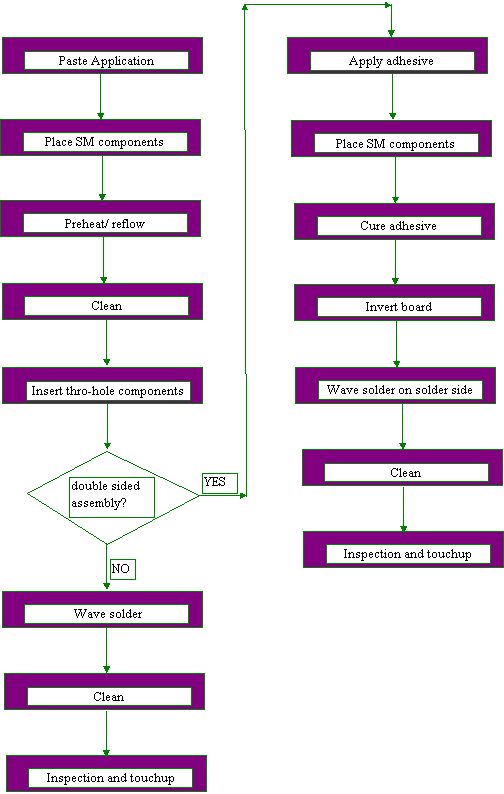 |
The process steps are described in the chapters to follow.
HOME UP